
Most fights don’t start as fights. They start as a need.
But instead of leading with the need, we lead with the complaint. And then we’re surprised when the conversation turns into a courtroom instead of a connection.
Here’s what I mean.
In almost every conflict, there’s what’s happening above the table and what’s happening under the table. Above the table are the words we say out loud: You’re late again. You never help. You’re always on your phone. You don’t even care. Those statements aren’t necessarily false, but they’re rarely the real issue. They’re the smoke, not the fire. (For more, this is from an illustration in Love Styles.)
Under the table is where the real action is happening. Under the table are the emotions and needs we’re often afraid to name: I feel alone. I’m overwhelmed. I don’t feel important. I need reassurance. I miss you. I don’t feel safe. When we skip the need and go straight to the complaint, our spouse doesn’t hear vulnerability; they hear accusation. And accusation almost always triggers defensiveness.

That’s why complaints feel so tempting. Complaints give us a sense of control. If I can prove you’re wrong, I can feel justified. If I can get you to change, maybe I’ll finally feel better. But complaints rarely lead to closeness. They lead to distance. Instead of comfort, we get conflict. Instead of resolution, we get a cycle.
This is where Stay In Your Lane becomes incredibly practical. Your spouse has a lane. God has a lane. And you have a lane. Your spouse’s lane is their choices and responses. God’s lane is the bigger work of transformation. Your lane is your internal world—your emotions, your honesty, your responsibility.
Naming the need instead of the complaint is staying in your lane.
It’s choosing to own what’s happening inside you rather than trying to control what’s happening inside them. That’s not weakness. That’s maturity. It’s emotional responsibility. It’s saying, “Here’s what’s true in me,” instead of, “Here’s what’s wrong with you.”
Which is harder for you?
So here’s the shift that can change a fight.
Before you speak, pause and ask yourself: What am I really feeling right now? Anger is usually a cover emotion. Under anger is often something more vulnerable—hurt, fear, loneliness, disappointment. Then ask a second question: What do I actually need right now? Not what do I want them to do—but what do I need?
When you lead with that, the tone changes. “You’re late again” becomes, “When I don’t hear from you, I feel alone and I need reassurance.” “You never initiate” becomes, “I’m starting to feel unwanted, and I need to feel desired by you.” “You don’t help with the kids” becomes, “I’m overwhelmed, and I need partnership.”
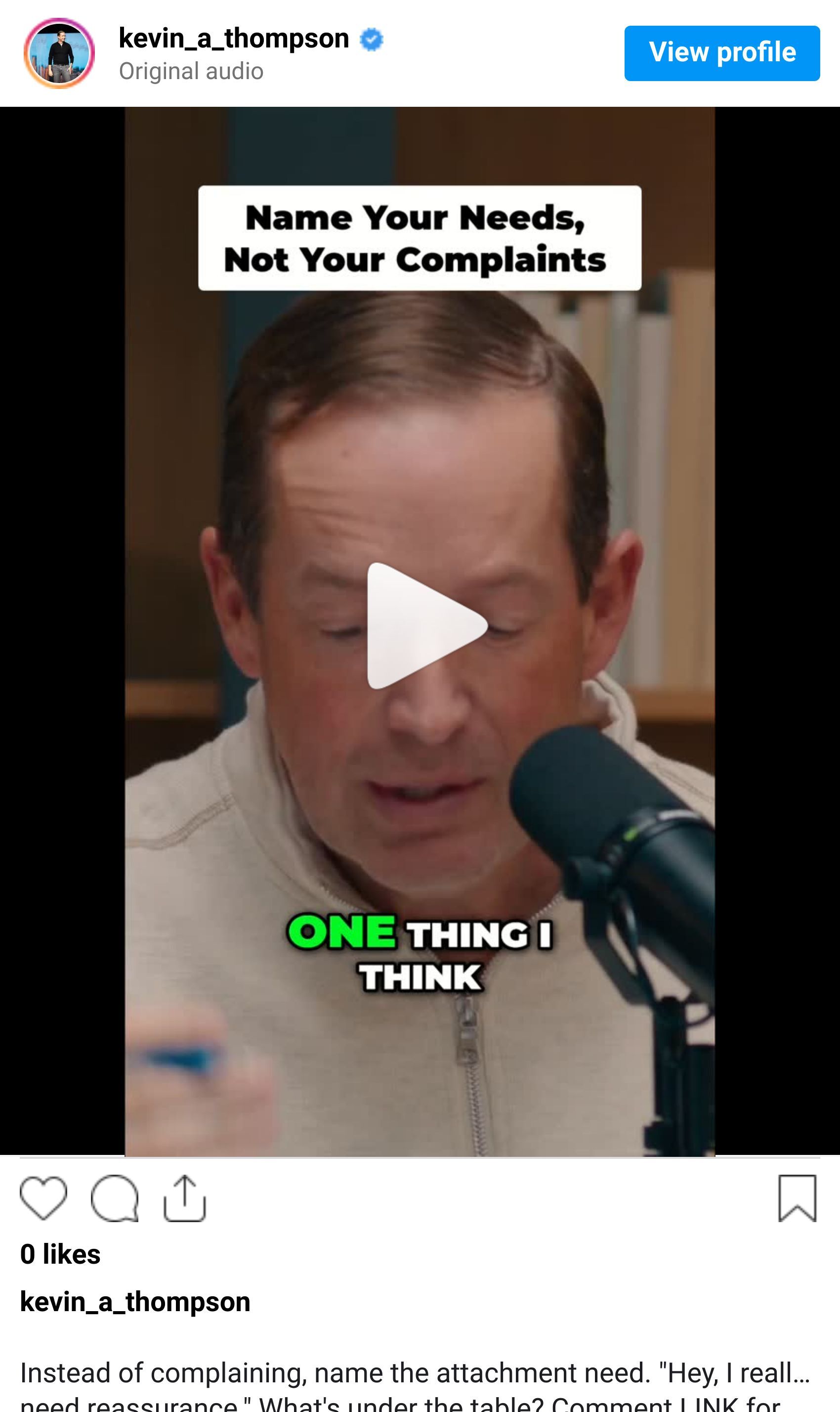
Same issue. Completely different impact.
This is why Love Styles helps so many couples. Most fights aren’t really about schedules, money, sex, or chores. They’re about attachment needs. Love Styles gives you language for what your nervous system is reaching for in conflict. If you lean anxious, your need is often reassurance and closeness. If you lean avoidant, your need is often calm, space, and safety. Once you can name your Love Style, your reactions stop feeling random and start making sense.
And when something makes sense, it becomes workable.
This one shift—naming the need over the complaint—can change the entire direction of a marriage. It turns “You’re the problem” into “Here’s what’s happening in me.” And now you’re no longer fighting each other. You’re fighting for understanding.
If you’ve got a conversation coming up, try this sentence starter: “I’m tempted to complain right now, but the real truth is… I need ______.” You can still address the issue. You can still ask for change. But you start with truth instead of accusation.
That’s how fights soften. That’s how connection grows. And that’s how you stay in your lane.
If you want to hear this skill worked out in real time, we break it down on this week’s episode of the Change the Odds podcast. And if you want the full framework—with language, tools, and next steps—Love Styles will help you identify what’s happening under the table so you can stop fighting the smoke and start dealing with the fire.
